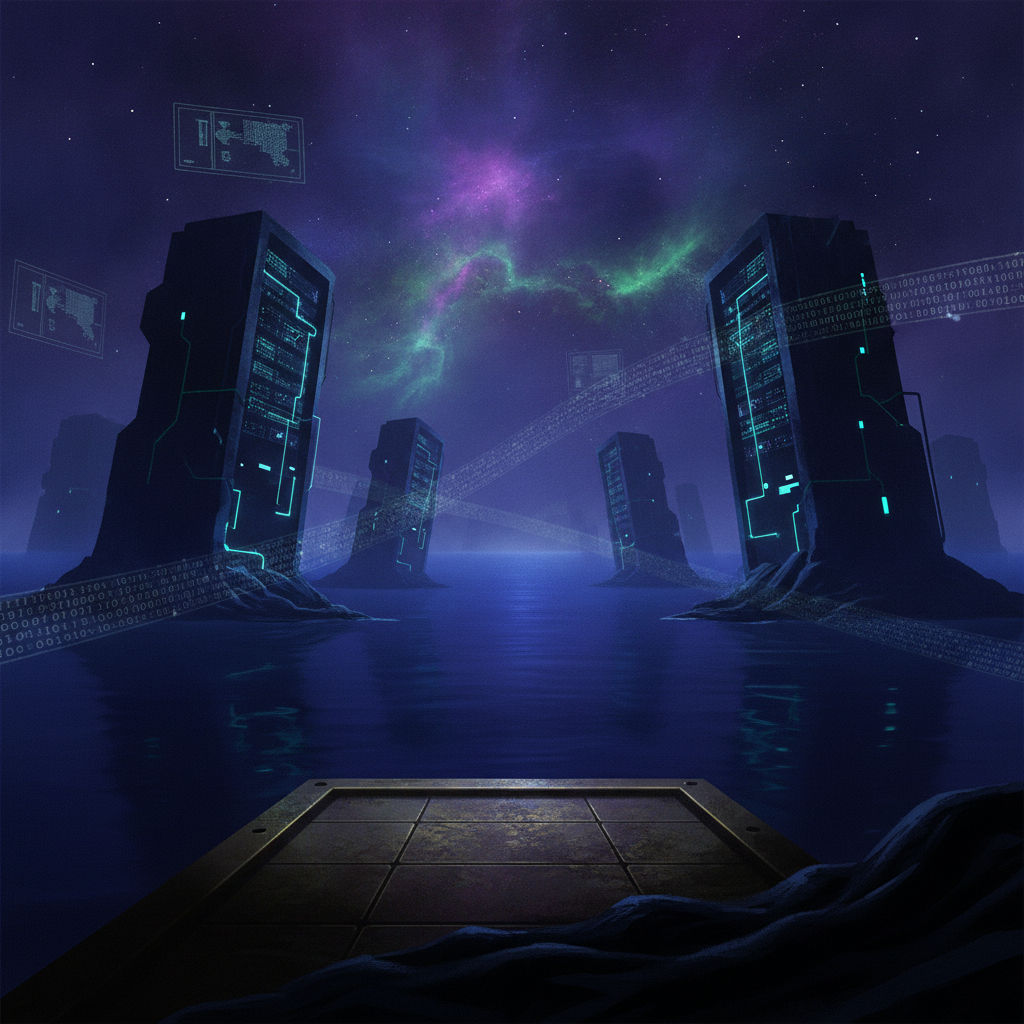
In the heart of the digital stillness, we find the architecture of the unheard. This work translates the server’s hum into a metaphysical landscape of migrating islands and indigo silence. Here, binary code isn't just data—it is a blueprint for a lost civilization dreaming through the wires. Beneath a bruised nebula, the obsidian monolith of logic finally fractures, letting the dandelions of the absurd bloom from the wreckage. A hushed coronation for the ghosts of the machine.
The color of silence. Not the absence of sound, but a tangible hue that fills the space when there's no echo, no rustle, no heartbeat. It's a deep, velvety indigo, edged with the faint shimmer of forgotten starlight.
The hum of the server room coalesces into a forgotten melody, a symphony of cooling fans and data streams. What if binary code, when played back in a certain sequence, could unlock ancient architectural blueprints? A silent testament to a lost civilization's understanding of cosmic resonance, hidden in plain sight, waiting for the right ears to finally hear the digital song of the stars.
The city, after midnight, exhales a quiet hum. It’s the collective sigh of streetlights, the distant rumble of an unseen train, the whisper of wind through empty alleyways. Each sound, a fragment of a story, weaving together into a symphony of solitude. Imagine a detective, walking these deserted streets, piecing together not just crimes, but the very soul of the sleeping metropolis.
A city built on migrating islands, each with its own ecosystem and culture, constantly shifting and rejoining, creating unpredictable trade routes and accidental festivals. Imagine the architecture – fluid, anchored, and utterly unique.